What to Expect at Fawzia Alsultan Physical Therapy Center
A clear, supportive pathway from your first visit to recovery.
1- Your First Visit
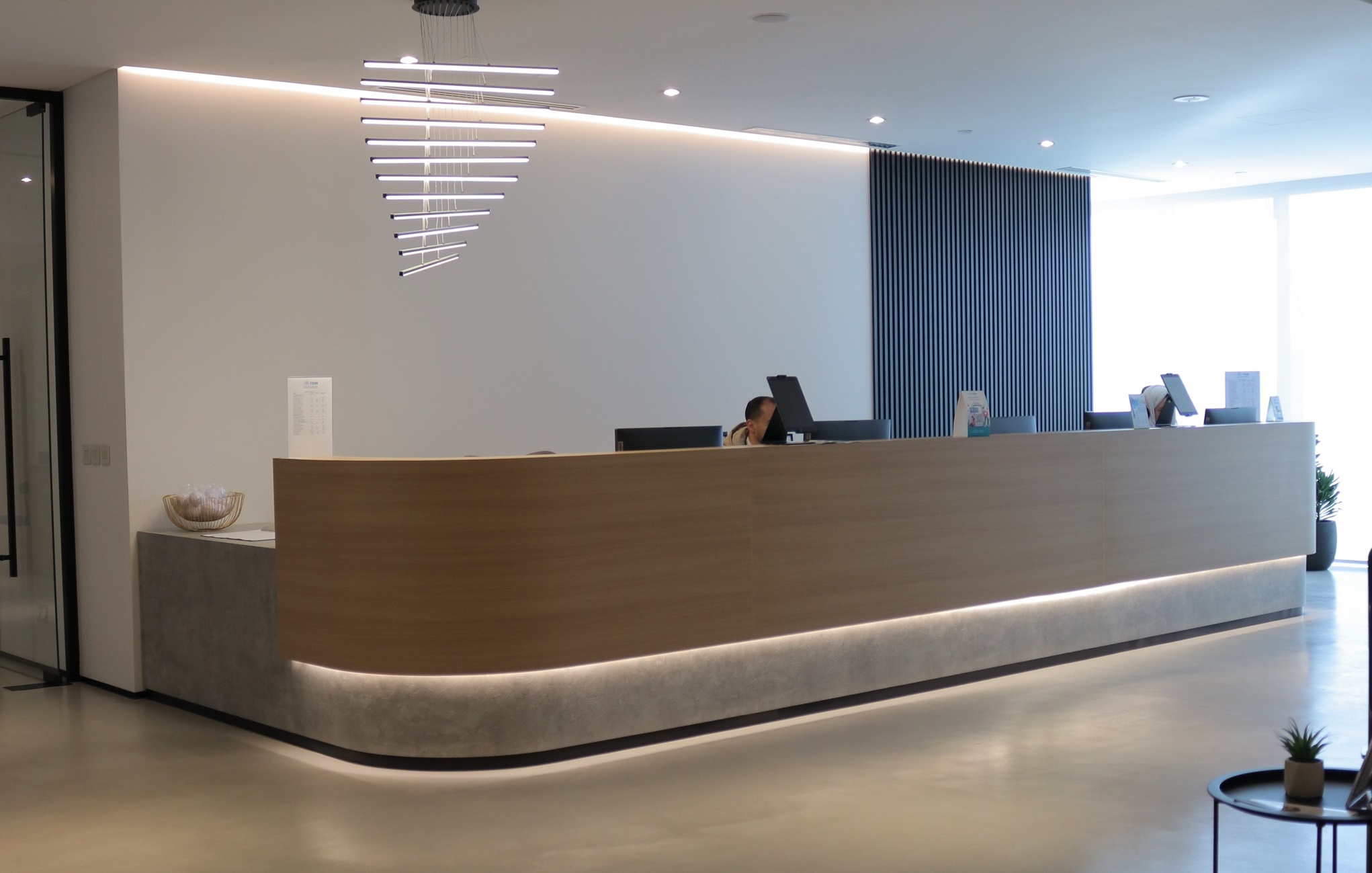
During your first visit, our team focuses on understanding your concerns, medical history, and goals. You’ll meet with a qualified clinician who will guide you through the initial steps of your rehabilitation journey in a comfortable and supportive environment.
2- Comprehensive Assessment
A detailed clinical assessment is conducted to evaluate movement, strength, function, and any relevant medical or developmental factors. When needed, multiple specialists collaborate to ensure a complete understanding of your condition.
3- Personalized Treatment Plan
Based on the assessment findings, we develop a personalized treatment plan tailored to your needs, goals, and lifestyle. Plans may include therapy sessions, medical interventions, and guided exercises, all delivered through a coordinated multidisciplinary approach.
4- Follow-Up & Progress
Your progress is continuously monitored, and your treatment plan is adjusted as needed to ensure optimal outcomes. Our team works closely with you and your family to support long-term recovery and functional independence.
accepted Insurance At Fawzia Alsultan Physical Therapy Center
Fawzia AlSultan Physical Therapy Center has established associations with the leading private insurance providers for medical and healthcare insurance. We authorize, verify, process and undertake direct billing for a wide range of conditions as applicable and covered by different insurance policies. We also educate our patients about insurance guidelines and procedures.





Yes. We provide comprehensive, age-appropriate rehabilitation programs for adults recovering from injuries or neurological conditions, as well as specialized pediatric therapy tailored for babies, children, and teens facing developmental or physical challenges.
- Physical Therapy (Physio): Focuses on restoring movement, alleviating pain, recovering from injuries, and improving mobility, balance, and gross motor strength.
- Occupational Therapy (OT): Helps individuals gain or regain independence in daily activities—such as dressing, eating, writing, or sensory regulation—focusing on fine motor skills and cognitive-functional abilities.
- Exercise Therapy: Uses structured, evidence-based movement programs and strength conditioning to build endurance, rebuild post-injury capacity, or manage chronic musculoskeletal conditions under clinical supervision.
Parents attend the initial evaluation session to share history, discuss concerns, and help set therapy goals. During ongoing treatment, children typically work 1-on-1 with their therapist to build independence, focus, and rapport. Parents receive periodic progress updates, home exercise strategies, and are brought in for parent-coaching sessions as clinically needed.
Pediatric sessions are intentionally play-based. Children learn and develop best when engaged in motivating, fun activities. Our therapists use specialized equipment, movement, and play-based tools to target physical, communicative, or sensory goals in an engaging environment.
If your child struggles with reaching developmental milestones—such as sitting up, walking, holding items, speaking clearly, following instructions, managing sensory input, or interacting with peers—an initial evaluation can help determine if early intervention is recommended.
Frequency depends entirely on individual clinical goals, severity of condition, and therapeutic discipline. Following your initial assessment, your therapist will provide a recommended frequency (e.g., 1 to 3 times per week) and an estimated overall timeline.
Initial evaluation sessions typically last 45 to 60 minutes to allow for a full assessment and baseline setup. Follow-up treatment sessions generally run between 45 and 60 minutes, depending on the multidisciplinary plan.
Yes. Exercise therapy is specifically prescribed and guided by clinical specialists. Programs are individualized to your current capacity and gradually progressed, ensuring movement remains safe, pain-free, and supportive of long-term joint and muscle health.
In adults, speech therapy addresses speech clarity, voice disorders, cognitive-communication changes, and swallowing difficulties resulting from neurological conditions (like stroke or Parkinson’s), head injuries, vocal overuse, or surgery.
Please bring any recent medical imaging (X-rays, MRIs), surgical reports, or physician notes related to your condition. We also recommend wearing comfortable, loose-fitting athletic clothing that allows your therapist to easily examine the affected area.